Rwanda Terrain: Exploring the Landscape of the “Land of a Thousand Hills
Updated: June 23, 2026
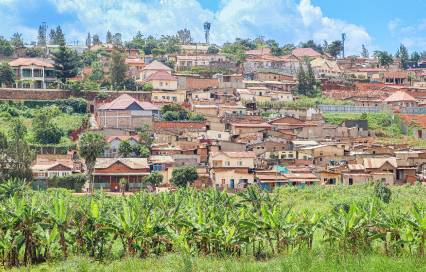
Rwanda is known as the “Land of a Thousand Hills” because its landscape is dominated by rolling hills across the entire country. Rwanda’s landscape features rolling hills, volcanic mountains, valleys, and scenic lakes, which have influenced the geography and the culture of the country. Although Rwanda is a relatively small country in Africa, it has a fantastic range of landscapes that make it one of the most striking destinations in East Africa.
For travelers and nature lovers, understanding the Rwanda terrain provides valuable insight into why the country offers such unique experiences—from gorilla trekking in misty mountains to wildlife safaris across savannas. This guide explores the geographical features, ecosystems, and landscapes that make Rwanda such a fascinating destination.
Overview of Rwanda’s Geography
Rwanda is located in East-Central Africa and shares borders with Uganda, Tanzania, Burundi, and the Democratic Republic of Congo. Although the country covers only about 26,000 square kilometers, its landscapes vary dramatically due to elevation differences and geological formations.
The Rwanda terrain is characterized by a series of elevated plateaus and hills with an average altitude of around 1,500 meters above sea level. In many regions, the land rises even higher, especially in the western mountainous areas. This high elevation gives Rwanda a cooler climate compared with other equatorial countries.
Geographers often describe the terrain in Rwanda as a combination of mountains, rolling hills, wetlands, and volcanic features. These diverse topographies not only make the country attractive to the eye, but they have also been instrumental in the development of agriculture, biodiversity, and the tourism sector in the country.
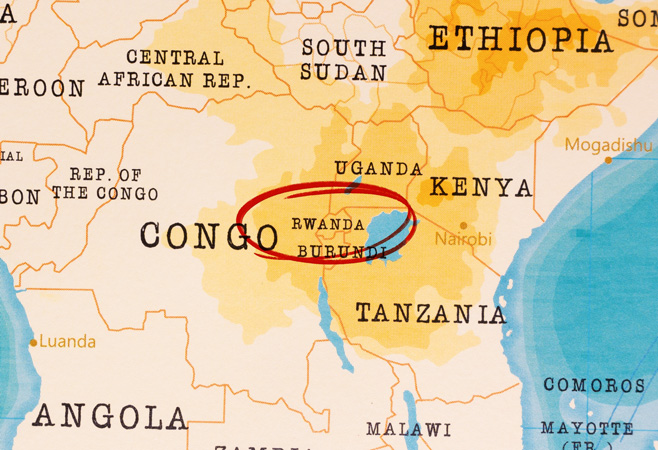 Rwanda is located in East-Central Africa
Major Geographic Regions of Rwanda
The geography of Rwanda can generally be divided into three main regions. The different regions add to the Rwandan terrain that is so unique to the country.
Western Mountain Region
The western region of Rwanda is the most mountainous in the country. This area is located on the Albertine Rift, which is part of an extended East African Rift Valley system.
This region is dominated by the Virunga Mountains, a chain of volcanic peaks forming a dramatic skyline, forming a dramatic skyline of volcanic mountains. These mountains are among the highest in Rwanda and house Volcanoes National Park, which is one of the most renowned conservation areas of wildlife within Africa.
This mountainous landscape is a key element of the terrain of Rwanda, providing habitat for rare wildlife species and supporting dense forests that thrive in the cool, misty climate.
Central Plateau and Rolling Hills
The central region of Rwanda consists of gently rolling hills and fertile valleys. This area includes the capital city of Kigali and many agricultural communities.
The undulating hills create the iconic scenery that has made the Rwandan terrain famous around the world. Terraced farming is common here, as farmers adapt the slopes for agriculture.
These hills support crops such as bananas, coffee, tea, and beans, making the region an important agricultural zone. The fertile soil and moderate climate allow Rwanda to maintain a strong farming tradition.
Eastern Plains and Savanna
In contrast to the mountainous west, eastern Rwanda features flatter landscapes and open savannas. This region is home to Akagera National Park, a wildlife reserve known for its savanna ecosystems and large mammals.
The terrain here is lower in elevation and includes wetlands, lakes, and grasslands. These contrasting landscapes can change within just a few hours of travel.
The Virunga Mountains and Volcanic Landscapes
One of the most dramatic aspects of the Rwanda terrain is the chain of volcanic mountains known as the Virunga Mountains. These volcanoes stretch across Rwanda, Uganda, and the Democratic Republic of Congo.
Among the most prominent peaks are:
- Mount Karisimbi (the highest peak in Rwanda)
- Mount Bisoke
- Mount Muhabura
- Mount Gahinga
Mount Karisimbi is more than 4500 meters above sea level and is topped with alpine forests and foggy woodlands. Their volcanic origin creates fertile soils that support dense vegetation.
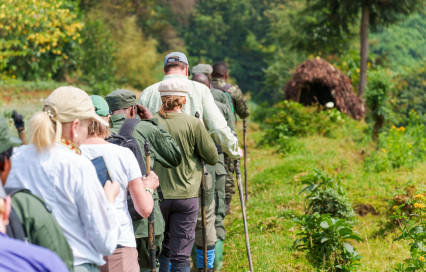
These mountains are also famous as the habitat of the endangered mountain gorilla. Gorilla trekking in Volcanoes National Park is one of the most popular tourist attractions in Rwanda, which attracts tourists globally.
Hills and Valleys: The “Land of a Thousand Hills”
Perhaps the most recognizable feature of the Rwandan terrain is the endless pattern of hills that stretches across the country.
Travelers driving through Rwanda often notice that the landscape rarely appears flat. Instead, hills rise and fall continuously, creating scenic views that seem to stretch forever.
These hills shape daily life in Rwanda. Many villages are built along slopes, and farmers cultivate crops using terrace systems that prevent soil erosion. This agricultural adaptation reflects the deep relationship between people and Rwanda's terrain.
The valleys between hills often contain streams, wetlands, and fertile farmland. These natural formations contribute to Rwanda’s productivity and biodiversity.
Lakes and Water Bodies
Rwanda’s landscapes are also shaped by numerous lakes and rivers.
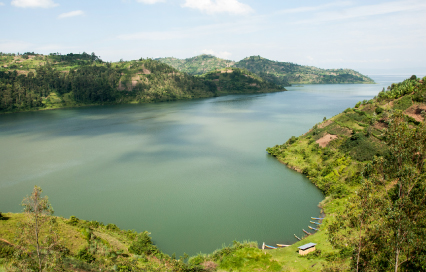
The most famous is Lake Kivu, one of Africa’s Great Lakes. Located along Rwanda’s western border, Lake Kivu sits within the Rift Valley and is surrounded by steep hills and volcanic mountains.
The lake provides fishing opportunities, tourism activities, and breathtaking views of the surrounding terrain.
Other important lakes include:
- Lake Muhazi
- Lake Ihema
- Lake Rweru
These water bodies are an integral part of the Rwanda terrain, supporting wetlands, wildlife habitats, and local communities.
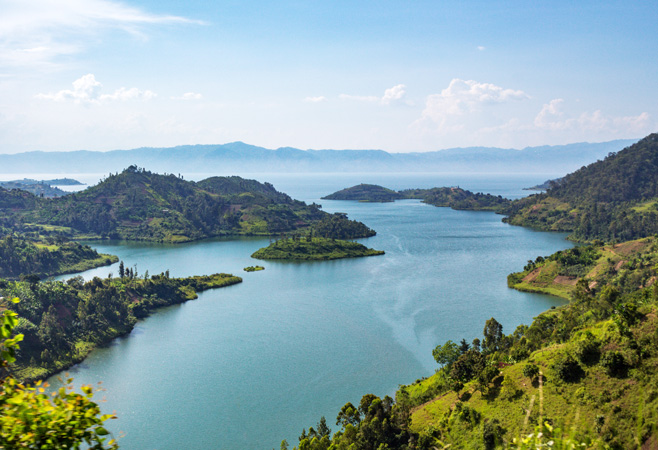 Lake Kivu, one of Africa’s Great Lakes in Rwanda
Forest Ecosystems and Natural Landscapes
The diversity of landscapes in Rwanda allows for a wide range of ecosystems.
Nyungwe Forest
The Nyungwe Forest National Park is among the ancient rainforests in Africa. The park is mountainous in nature and has thick tropical forests that are biodiversity-rich.
Tourists will be able to visit canopy walkways and hiking paths and view chimpanzees and other primates.
Volcanoes National Park
This park is found in the Virunga Mountains and is known by most people as the gorilla trekking park, and is currently one of the most visited sites in Rwanda.
The volcanic landscapes, bamboo forests, and misty slopes make this park one of the most unique examples of the Rwandan terrain.
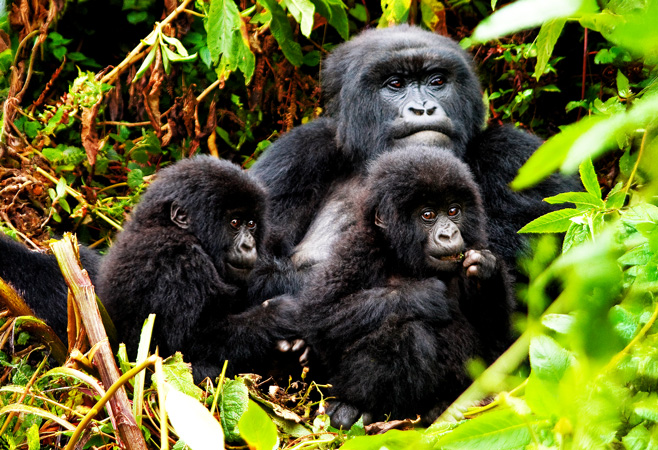 Female Gorilla and her twins in Rwanda Africa
Akagera National Park
Akagera National Park offers a very different landscape. In this case, tourists are able to view savannas, wetlands, and lakes that have wildlife like elephants, lions, giraffes, and hippos.
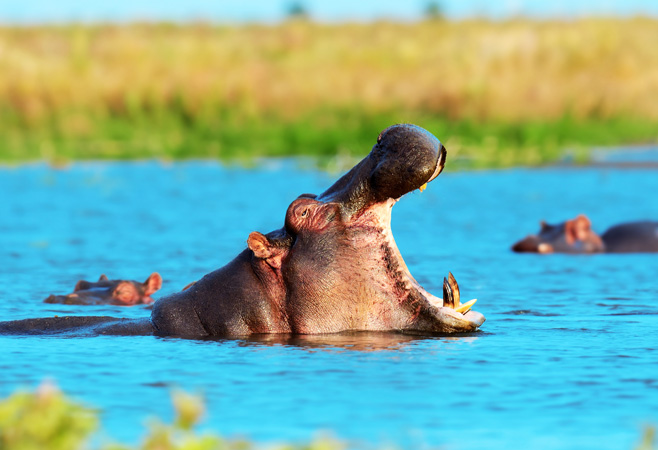 Hippo family
Climate and Terrain Relationship
Rwanda’s high elevation strongly influences its climate. Although the nation is just close to the equator, the temperatures are relatively cool compared to most of the tropical areas.
Rwanda has two seasons of rainfall and two dry seasons annually. The mountainous western regions receive more rainfall than the eastern plains, which contributes to the lush forests found there.
This variation in climate helps support Rwanda’s diverse ecosystems and agricultural productivity.
Biodiversity and Wildlife
The varied landscapes of Rwanda support a remarkable range of wildlife species.
Mountain regions provide habitat for rare animals such as:
- Mountain gorillas
- Golden monkeys
Savanna areas support larger mammals including:
- Elephants
- Lions
- Zebras
- Buffalo
Birdlife is also abundant, with more than 700 bird species recorded across the country. The diverse habitats created by the terrain of Rwanda make it one of Africa’s most important biodiversity hotspots.
How Rwanda’s Terrain Shapes Human Life
The natural environment plays a major role in shaping the way people live in Rwanda.
The country is predominantly agricultural, and most people in the rural communities cultivate the farmland through terracing of the steep hillsides.
Many roads wind through the mountains, making journeys both scenic and challenging. Nevertheless, these landscapes bring in the possibilities of ecotourism and sustainable development.
Tourism has become an increasingly important industry as visitors come to experience the beauty of the Rwandan terrain through hiking, wildlife safaris, and nature exploration.
Visiting Rwanda: Visa Application Guide
Whenever you intend to visit the mountains, forests, and lakes that characterize the Rwandan topography, obtaining the correct travel documents is an essential step.
Depending on your nationality, you may be able to apply for a visa online or obtain one on arrival, which simplifies the process of entering the country. The online application allows visitors to submit their documents, complete the form, and receive approval before departure.
Applying online can help reduce waiting time at the airport. This is an option for many tourists who organize their adventures, like gorilla trekking or wildlife safaris.
With your visa approved, you can fully enjoy the stunning landscapes and natural wonders that Rwanda has to offer.
Why Rwanda’s Landscapes Are Unique in Africa
What makes Rwanda so remarkable is the concentration of diverse landscapes within such a small area.
A visitor can travel in a span of a few hours from the volcanic mountain to the rainforest ecosystem and later to the savanna plains. This uniqueness makes the Rwanda landscape one of the most geographically differentiated landscapes in Africa.
Rwanda has excellent views that have drawn tourists, researchers, and even photographers to the mist-covered volcanoes of the Virunga mountains extending to the tranquil waters of Lake Kivu.
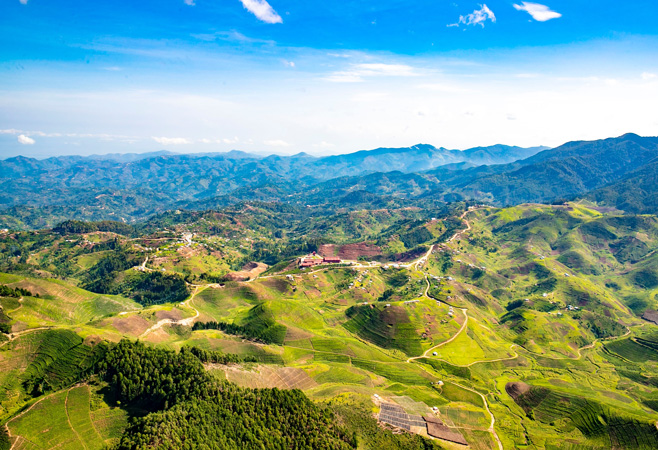 Rwanda the Thousand Hills upper view of the Rwanda Hills
Frequently Asked Questions
1. Why is Rwanda called the “Land of a Thousand Hills”?
Rwanda is referred to as the land of a thousand hills since the topography comprises rolling hills that cover the whole country. These hills make up the base of the Rwandan terrain, which gives the terrain beautiful scenes and determines agricultural activities.
2. What are the main geographical features of Rwanda?
Rwanda's landscape consists of volcanic mountains, hilly areas, lakes, wetlands, and savannas. Major attractions are the Virunga volcanoes, Lake Kivu, and national parks like the Nyungwe and Akagera.
3. What is the highest mountain in Rwanda?
The highest mountain in Rwanda is Mount Karisimbi, which is approximately 4,507 meters above sea level. It is part of the Virunga mountain range and an important feature of the country’s mountainous landscape.
4. How does Rwanda’s terrain affect its climate?
The high elevation of Rwanda results in cooler temperatures than many equatorial regions. Mountainous regions receive more rainfall than the eastern plains, whereas the eastern plains are drier.
5. Do travelers need a visa to visit Rwanda?
Most international travelers need a visa to enter Rwanda. Visitors can apply online through Rwanda Immigration Services, which offers a simple eVisa process that allows travelers to obtain their visa before arrival.
Conclusion
Rwanda’s landscape plays a central role in shaping the country’s identity. A combination of rolling hills, volcanic mountains, forests, lakes, and savannas makes up the landscape that is beautiful and rich in ecology.
These landscapes shape the country’s climate, wildlife, agriculture, and tourism. They also contribute to the country’s identity as the “Land of a Thousand Hills.”
Rwanda offers a close connection to both nature and culture, and its unique politics and wildlife provide great value to the traveler looking to have memorable landscapes and wildlife experiences. With proper planning and a visa obtained through Rwanda Immigration Services, visitors can experience firsthand the breathtaking terrain that makes Rwanda truly extraordinary.